


Unblocktober: What Really Causes Blocked Drains?

It's Unblocktober, the month-long campaign to get people thinking about what goes down their drains.
For us, it's a timely one. Blocked drains are among the most common call-outs we get across the sites we look after, and nearly every one of them could have been avoided.
A blocked drain is rarely just an inconvenience. In a school it can mean closed toilets and unhappy children. In a care home it can mean disruption for residents and a real hygiene risk.
In a commercial building it can mean flooded washrooms, bad smells and an unexpected repair bill. The good news is that the causes are predictable, and so are the fixes. So what really causes blocked drains?
The usual suspects
Whatever the setting, the same few culprits turn up again and again.
Wet wipes are top of the list. Even wipes labelled "flushable" don't break down the way toilet paper does. They snag in pipes, collect other debris and build into solid blockages.
Fats, oils and grease from kitchens go down the sink as a liquid, then cool and set hard inside the pipework. Over time they narrow the pipe until nothing can get through.
Paper towels and sanitary products are designed to hold together when wet, which is exactly why they shouldn't be flushed.
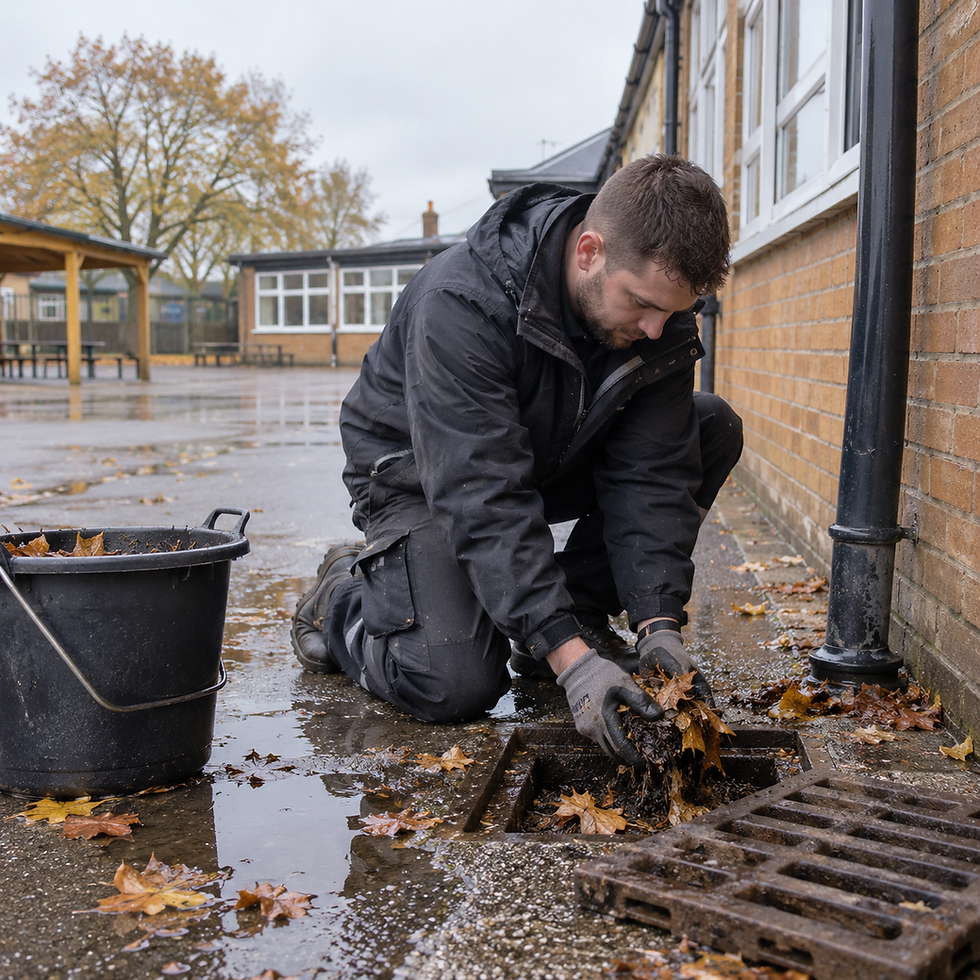
Leaves, silt and grit wash into outside gullies, channel drains and gutters. Autumn is peak season, which makes Unblocktober the perfect time to check them.
Schools - what really causes blocked drains?
Schools see a bit of everything. Paper towels and whole toilet rolls get flushed, particularly in primary toilets, along with the occasional toy, sock or bottle top. Art and design rooms are another hotspot, with paint, clay, plaster and glue washed down sinks that often have no silt trap to catch them.
School kitchens produce plenty of grease, and if grease traps aren't emptied on a regular schedule, problems follow. Outside, playground and pitch drains fill with leaves, bark chippings, sand and rubber crumb.
Holidays play a part too. When a building sits quiet for weeks, deposits settle in the pipes, and the first busy week back can be enough to tip a borderline drain into a full blockage.
Care homes
n care homes, wet wipes and continence wipes are the biggest cause by a distance, followed by pads, gloves and aprons. Staff are busy and caring for people under pressure, and when a disposal bin isn't close to hand, the toilet can become the easy option.
Busy kitchens cooking for residents every day, often with textured or pureed diets, generate a lot of fat and food waste. High-volume laundries add lint to the system, and assisted bathrooms collect hair. None of these are unusual on their own, but together they put drains under constant strain.
Commercial premises
In offices and commercial buildings, the staff kitchen is often where trouble starts. Grease, coffee grounds, tea bags and food scraps all end up down the sink. In washrooms, too few sanitary bins, or paper towels being flushed when a hand dryer is out of action, lead to repeat blockages.
Cleaning can contribute as well. Tipping dirty water full of grit, mop fibres and floor scrubber waste down internal drains builds up sediment over time. Outside, car park gullies and interceptors quietly silt up, often because nobody has them on a maintenance schedule.
Simple habits that prevent the emergency call-out
Most blockages can be prevented with a few simple, consistent habits:
Only the 3 Ps down the toilet: pee, poo and paper. Everything else goes in the bin.
A bin in every cubicle, backed up by clear, friendly signage.
Sink strainers in kitchens, and scrape plates into the food waste before washing up.
Collect cooled fat and oil in a container rather than pouring it away.
Service grease traps on schedule, not just when there's a problem.
Clear gullies, gutters and downpipes every autumn, before winter rain arrives.
Keep cleaning waste out of internal drains and dispose of it properly.
Plan preventative jetting or a CCTV drain survey, especially for older buildings with a history of problems.
Know the early warning signs
Drains usually tell you something is wrong before they fail completely. Gurgling noises, unpleasant smells, water draining slowly and water levels rising in toilets are all signs of a developing blockage. Reporting them early means a quick, planned fix instead of an emergency on a Monday morning.
How we can help
At Vital Facilities Solutions, we look after schools, multi-academy trusts, care homes and commercial premises across Yorkshire and the North of England.
Our caretaking, cleaning and site maintenance teams keep an eye out for early warning signs as part of their regular visits, so problems get picked up before they become call-outs.
If you'd like a hand putting a drain care routine in place, or you'd like us to take a look at a drain that's been causing problems, we'd be happy to have a chat.
Call us on 01484 940234, email admin@vital-facilities.co.uk or visit vital-facilities.co.uk.


Comments